About Paul Stober | Technology, Entrepreneurship & Music
Managing Partner, E-Internet Marketing Services
Helping Small Businesses Make Technology Work for Them
 I’ve always been fascinated by technology—not simply by what it can do, but by what it can help people accomplish.
For more than 40 years, I’ve worked with computers, software, websites, and business systems. Along the way, I’ve started businesses, developed software products, built websites, and helped organizations put technology to practical use.
Today, I’m Managing Partner at E-Internet Marketing Services (EIMS), where I focus on the technology behind our digital marketing services, including website development, marketing automation, artificial intelligence, and the systems that help our clients attract and serve customers.
But if there’s one thing I’ve learned over the years, it’s this:
The best technology isn’t necessarily the most complicated. It’s the technology that solves a real problem at a cost that makes sense.
That’s the philosophy I bring to EIMS every day.
A Programmer at Heart
 My interest in technology actually began with mechanical engineering.
I’ve always enjoyed designing things and figuring out how they work. So when it came time for college, I enrolled at Drexel University to pursue mechanical engineering.
Then I took a computer programming course.
I quickly discovered that I enjoyed writing software even more than designing mechanical devices. Programming gave me a way to turn ideas into working systems, often without needing anything more than a computer and a little imagination.
That experience changed my career direction.
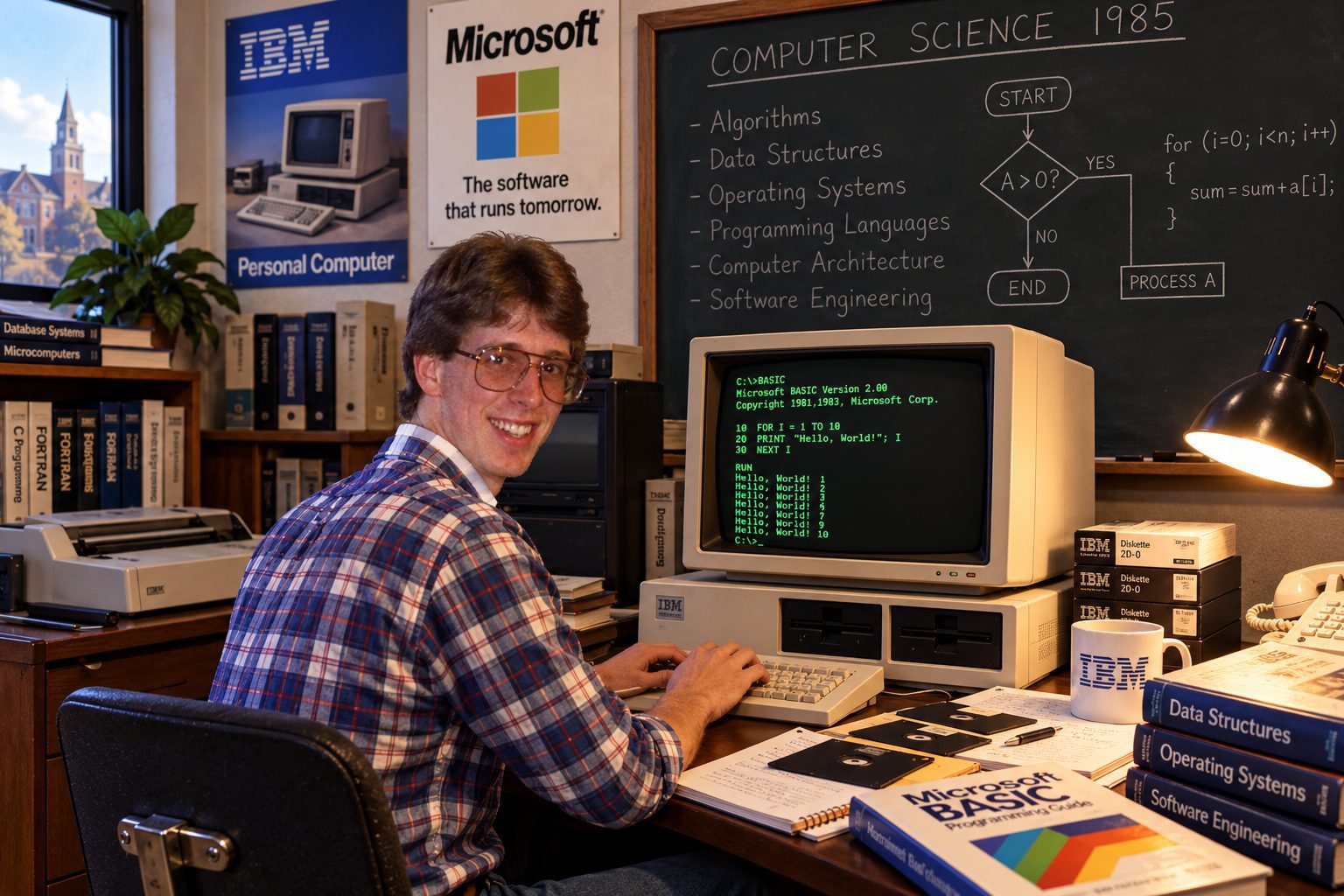
I transferred to Millersville University and graduated in 1985 with a Bachelor of Science degree in Computer Science.
After graduation, I was selected as part of a small group of graduates to work on an educational software project for an organization in South Africa.
In 1986, I joined Soft Systems Engineering, developing software that allowed personal computers to communicate with programmable logic controllers (PLCs) used on factory floors.
We were working with early versions of Microsoft Windows, helping connect the emerging world of personal computing with industrial automation.
It was a fascinating time to be a programmer.
But what I enjoyed most wasn’t simply writing code.
It was seeing something I’d developed actually work—and knowing it made someone’s job easier.
That feeling has stayed with me throughout my career.
How a Golf Directory Became a Software Company
 One of my earliest entrepreneurial ventures started with a simple frustration.
I’m a golfer, and back in the late 1980s, finding information about golf courses outside your immediate area wasn’t easy.
Remember, this was before the Internet.
You couldn’t simply search Google for golf courses near your vacation destination.
So I decided to create a directory of Pennsylvania golf courses.
Using database software, I compiled information about courses throughout the state, including their locations, addresses, and telephone numbers.
What began as a personal project caught the attention of the Golf Course Owners of Pennsylvania, an advocacy organization representing golf course owners.
They contacted me about developing a computerized golf handicap system.
That opportunity eventually led me to establish Fairway Handicap Systems in 1989.
I personally designed and programmed the system, which grew to serve more than 30 golf courses throughout the Mid-Atlantic region.
It was an exciting experience, taking an idea from concept to a working commercial product.
But it also taught me one of my earliest and most important business lessons.
Despite the system’s progress, the initial investors became impatient during the rollout. The company was closed in 1993.
Naturally, that was disappointing.
But I came away with something valuable: firsthand experience in software development, customer relationships, product management, and the realities of running a business.
I also learned that even a good idea needs the right financial support, realistic expectations, and time to succeed.
Those lessons would become especially important years later.
An Unusual Career Path That Made Me a Better Problem Solver
 My professional journey hasn’t always followed a conventional path.
In 1994, I began working as a Technology Analyst for Tournament Sports, Inc.
A couple of years later, I met the company’s attorney, who asked me to provide technology services for his law office.
That eventually led me into the legal profession.
I pursued paralegal studies through Blackstone and worked as a paralegal until 2006.
At first glance, that might seem like an unusual detour for a computer programmer.
But I discovered that legal work and software development require many of the same skills.
Both involve research, organization, analytical thinking, attention to detail, and the ability to work through complicated problems.
My years in the legal profession strengthened those skills and taught me to approach problems from different perspectives.
Returning to Technology — Tournament Sports
 In 2006, I returned to Tournament Sports just as the Internet was becoming an essential business tool.
I developed the company’s website, a golf-related website, and a website for the Eastern Basketball Alliance, a minor league basketball organization operating along the Atlantic corridor.
I also developed the system used to manage the league’s statistics.
These projects combined several things I enjoyed: programming, databases, website development, and finding practical solutions to operational challenges.
They also convinced me that the Internet would create tremendous opportunities for businesses of all sizes.
From Software Development to Online Business
 Around this time, I also began developing my own online business ventures.
In 2007, I established PND Online Enterprises, initially focusing on website development and e-commerce.
I built several online stores and gained firsthand experience with the challenges of creating and operating businesses on the Internet.
I learned that building a website was only part of the equation.
A business also needed a way to attract visitors, communicate with prospective customers, manage information, and turn online interest into actual sales.
That realization gradually expanded my interest from programming and website development into digital marketing.
And it set the stage for my involvement with EIMS.
Joining E-Internet Marketing Services
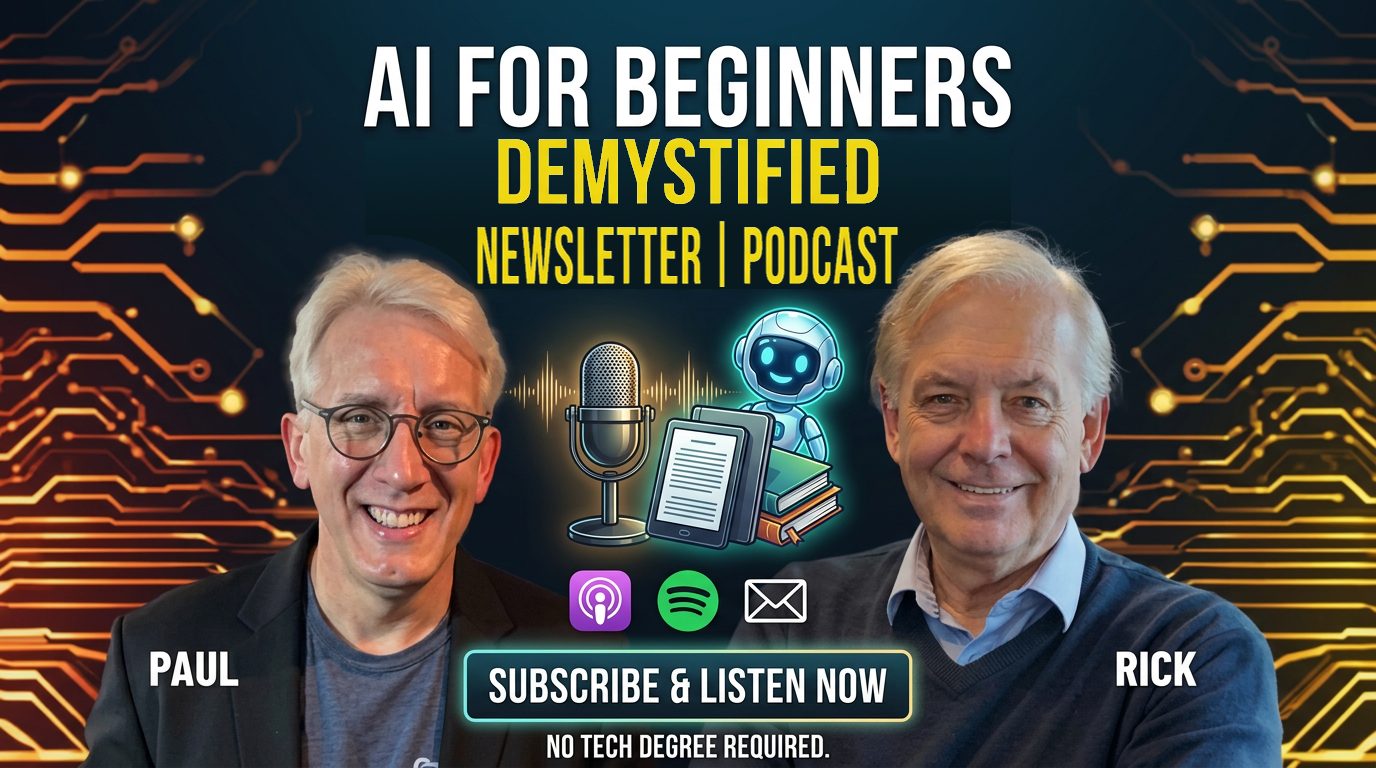
 In 2015, my brother-in-law, Rick Samara, asked me to help develop websites for clients of E-Internet Marketing Services.
Rick had founded EIMS in 2007, with the goal of helping businesses use Internet marketing to reach more customers.
My background in programming, website development, and online business complemented Rick’s experience in marketing and business development.
What began as a website development relationship grew into a broader business partnership.
As Managing Partner, I’ve concentrated primarily on the technical side of EIMS.
Over the years, that has included website development, technology integration, marketing systems, customer relationship management, and automation.
One of my major responsibilities has been implementing and managing our HighLevel CRM platform.
HighLevel allows us to connect many of the pieces that businesses need to manage their online marketing, including lead capture, customer communications, automated follow-up, and other business processes.
Instead of relying on a collection of disconnected tools, we can help clients develop systems that work together.
And that’s something I particularly enjoy.
Taking a complicated process, organizing the moving parts, and building a system that makes it easier to manage.
Our philosophy at EIMS has always been straightforward:
**You do what you do best. We do the rest.**
Artificial Intelligence — The Next Big Opportunity
 I’ve watched technology change dramatically since I graduated from college in 1985.
Personal computers became commonplace.
The Internet transformed communication and commerce.
Search engines changed how customers discovered businesses.
Mobile devices made information available almost everywhere.
Cloud computing and automation introduced capabilities that once required expensive, specialized systems.
And now artificial intelligence is changing the landscape again.
For someone who has spent much of his career working with technology, it’s an exciting time.
But I also recognize that for many business owners, the pace of change can be overwhelming.
New terminology seems to appear almost every week.
SEO. AEO. GEO. AI agents. Large language models. Marketing automation.
It’s enough to make anyone wonder where to begin.
At EIMS, our goal is to make these technologies understandable and useful.
We’re helping businesses adapt to AI-driven search through Search Engine Optimization (SEO), Answer Engine Optimization (AEO), and Generative Engine Optimization (GEO).
We’re also incorporating AI-powered tools into customer communications, lead management, and business automation.
These technologies can help businesses become more visible, respond to customers more effectively, and reduce the time spent on repetitive administrative tasks.
But I don’t believe every new technology is automatically worth adopting.
Before recommending a solution, I think we should ask a few basic questions.
- What problem are we trying to solve?
- Will this technology actually improve the business?
- Is it practical to implement and maintain?
- And perhaps most importantly, is the expected benefit worth the cost?
Those questions help keep us focused on what matters.
Not the technology itself, but the results it can help produce.
Doris, Family, and a Life Shared Together
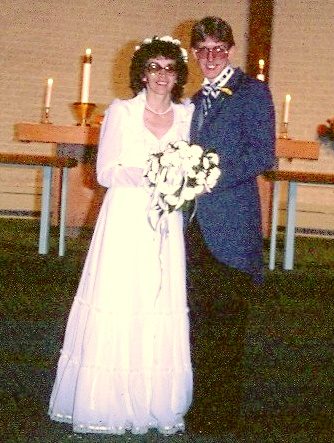 Of all the experiences and accomplishments in my life, one of the most meaningful began in 1983, when I married my wife, Doris.
Over the next four decades, we shared a life together through all the changes, challenges, and experiences that come with building a marriage and a family.
Looking back at my career, it’s easy to identify the businesses I started, the jobs I held, and the technologies I worked with. But those are only part of my story.
My life with Doris and our family was a much more personal and important part of those years.
Doris passed away in 2025, bringing to a close a chapter of my life that had begun more than forty years earlier.
Her passing was a profound change in my life, and the years we shared remain an important part of who I am.
As I continue into this next chapter of life, I carry those memories with me, along with an appreciation for the relationships and experiences that give life its greatest meaning.
Because when I look back, I realize that the most important things I’ve built in my lifetime weren’t necessarily businesses, websites, or computer programs.
They were the relationships, memories, and life I shared with the people I love.
The Importance of Harmony — In Music and Business
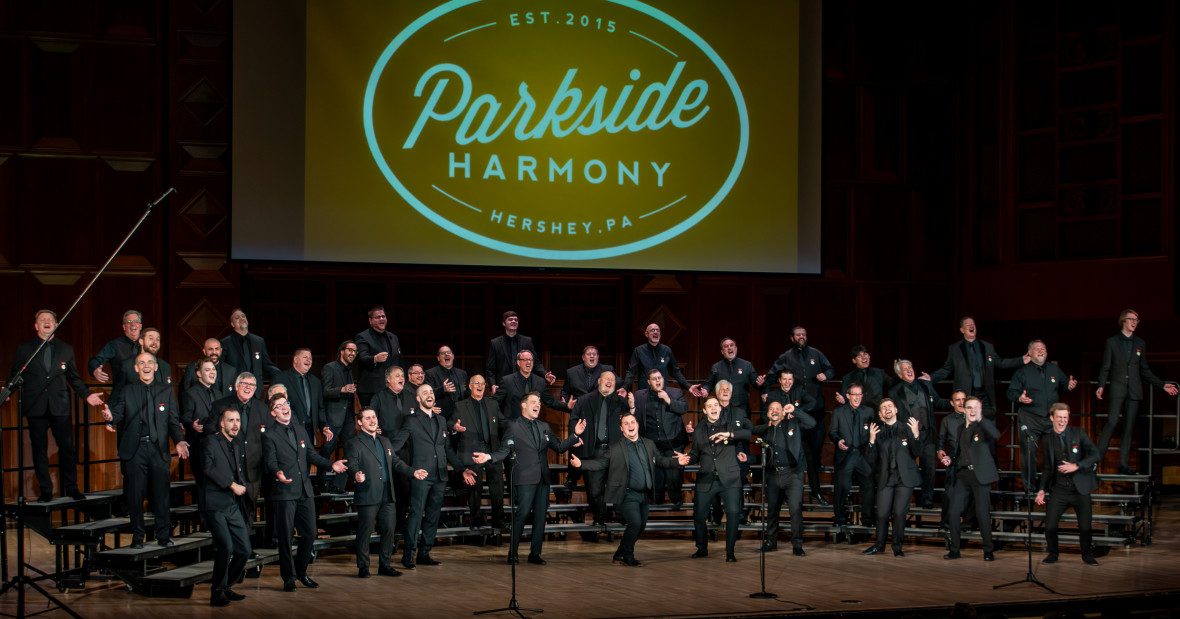 When I’m not working with technology, there’s a good chance you’ll find me singing.
Music has been part of my life since high school and college, and I’ve been involved in a cappella barbershop harmony since joining the Lancaster Red Rose Chorus and the Barbershop Harmony Society in 1994.
In 2011, I formed Sum of Each, a mixed barbershop quartet that has enjoyed success in regional and district competitions, as well as a top-20 finish at an international seniors quartet competition.
In 2015, I became a charter member of Parkside Harmony, a men’s barbershop chorus that has earned six top-five international competition medals, including a second-place silver medal in 2023.
More recently, I joined True North Barbershop Chorus, another internationally competitive ensemble.
One of the things I love about barbershop singing is the way individual voices combine to create something greater than any one singer could accomplish alone.
Each person has a different part.
Each part is important.
And everyone has to listen, adjust, and work together to produce the best possible sound.
I’ve often thought that’s a pretty good description of a successful business partnership, too.
At EIMS, Rick and I bring different skills and experiences to the table.
But when those strengths work together, we’re able to provide more comprehensive solutions than either of us could deliver alone.
Still Learning, Still Building, Still Curious
 After more than four decades in technology, one thing hasn’t changed.
I’m still curious.
I still enjoy learning something new, exploring an unfamiliar technology, and figuring out how to turn an idea into something useful.
That’s what attracted me to computer programming in the first place.
And it’s what continues to motivate me today.
I don’t pretend to know everything about every new technology.
In fact, I think one of the most important qualities anyone can have in this field is a willingness to keep learning.
The tools will change.
The platforms will change.
The way customers find and interact with businesses will continue to evolve.
But the underlying objective remains the same.
Help people solve problems.
Make complicated things easier.
Provide real value.
And treat people fairly.
That’s what I believe good business is all about.
Let’s Put Technology to Work for Your Business
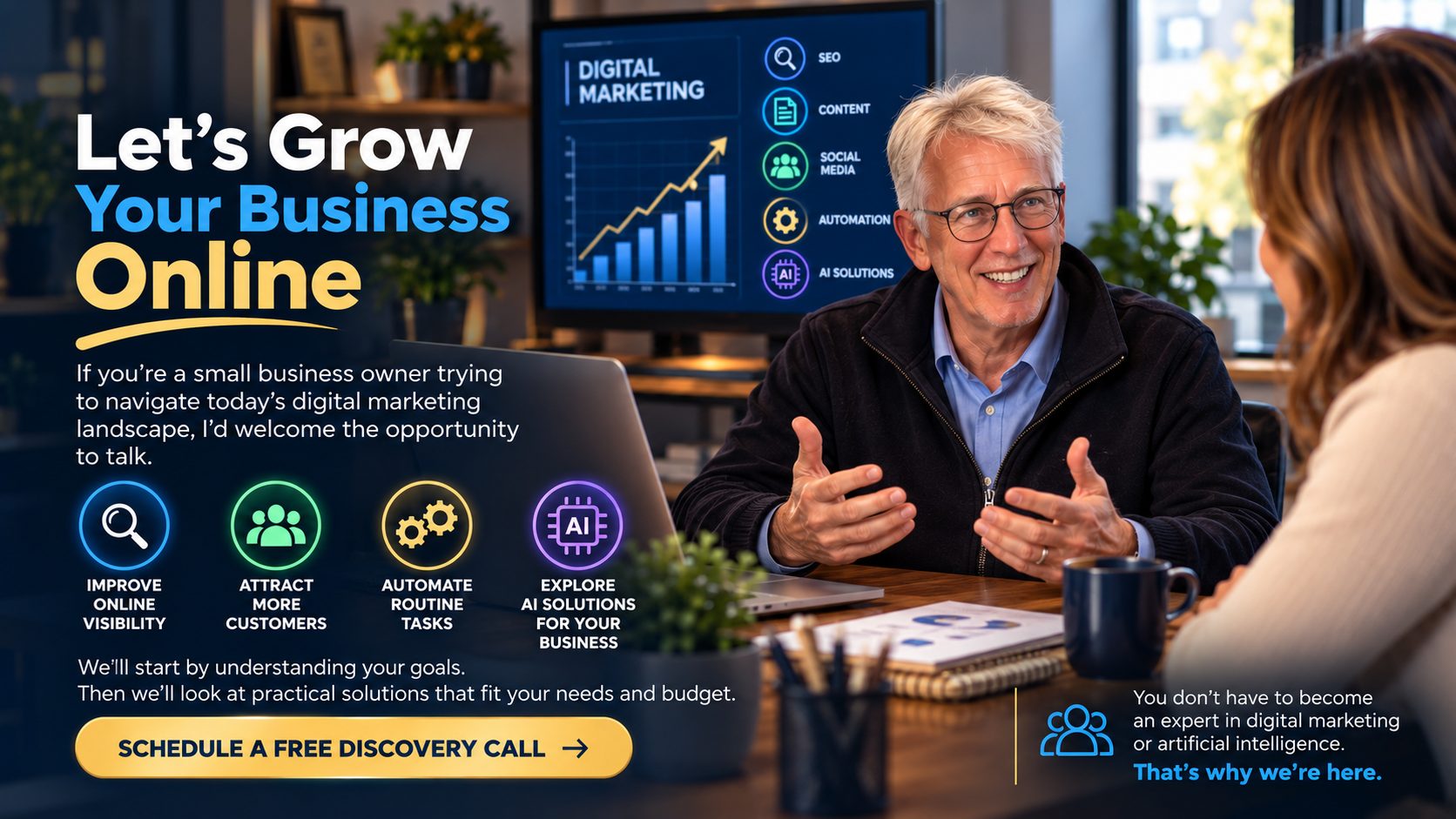
If you’re a small business owner trying to navigate today’s digital marketing landscape, I’d welcome the opportunity to talk.
Whether you’re looking to improve your online visibility, attract more customers, automate routine tasks, or explore what artificial intelligence could do for your business, we’ll start by understanding your goals.
Then we’ll look at practical solutions that fit your needs and budget.
You don’t have to become an expert in digital marketing or artificial intelligence.
That’s why we’re here.
Paul Stober
Managing Partner — E-Internet Marketing Services
Founder — PND Online Enterprises
Computer Science Graduate — Millersville University, 1985
*Helping businesses turn technology into opportunity.*