Quick Summary: ADA lawsuits increasing is more than a headline, it’s a documented 2025-2026 trend backed by federal court data. Website accessibility lawsuits jumped 27 percent in 2025, reaching over 3,100 federal filings and 5,000+ when state courts are included. This article explains what’s driving ADA lawsuits increasing nationwide: courts treating websites as places of public accommodation, a small group of highly active plaintiff firms, and artificial intelligence that now scans sites and drafts demand letters automatically. You’ll learn how legal action typically unfolds, which industries and states face the highest risk, and practical steps any business can take to get compliant before a demand letter arrives.
Somewhere in America, a small business owner is opening a certified letter right now, and it is not a coupon from the electric company. It is a demand letter, and it says their website violates the Americans with Disabilities Act. If that sentence made your stomach drop a little, good, because ADA lawsuits increasing across the country is not a scare tactic. It is a documented, data-backed trend, and 2025’s numbers prove it.
In 2025, federal courts saw 8,667 total ADA Title III lawsuits filed nationwide, according to Seyfarth Shaw, the law firm that has tracked these filings since 2013. That’s more than triple the number filed in 2013. Zoom in specifically on website accessibility claims, and the picture behind ADA lawsuits increasing gets even sharper: 3,117 federal website lawsuits were filed in 2025, a 27 percent jump over 2024. Add in state court filings, mostly concentrated in New York and California, and total digital accessibility lawsuits topped 5,000 for the year, another marker of ADA lawsuits increasing at a national scale. Every number points the same direction: up. And this isn’t confined to one industry or one zip code; ADA lawsuits increasing now touches nearly every sector that does business online.
This article breaks down why ADA lawsuits increasing is the reality for 2026, how artificial intelligence is fueling the surge on both the plaintiff and defense sides, when legal action actually gets taken, and what a business like yours can do about it before a demand letter lands in your inbox instead of ours. And if you’d rather have an ADA accessible website than an expensive lesson, our team is a phone call away.
How Many ADA Website Lawsuits Are Filed Each Year?
Let’s start with the receipts, because the case for ADA lawsuits increasing is easiest to make with a chart. Website accessibility litigation has grown almost every year since the first wave of cases in the mid-2010s, with only a brief dip in 2023 and 2024 before rebounding hard.
| Year | Federal Website Accessibility Lawsuits Filed | Year-Over-Year Change |
|---|---|---|
| 2017 | 814 | — |
| 2018 | 2,314 | +184% |
| 2019 | 2,890 | +25% |
| 2020 | 3,503 | +21% |
| 2021 | 4,055 | +16% |
| 2022 | 4,334 (peak) | +7% |
| 2023 | 2,794 | -35% |
| 2024 | 2,452 | -12% |
| 2025 | 3,117 | +27% |
Sources: Seyfarth Shaw / adatitleiii.com; EcomBack 2025 Annual Report; UsableNet 2025 Year-End Trends.
Notice that dip in 2023 and 2024? Plenty of business owners breathed a sigh of relief and figured the wave had crested. It hadn’t. It was a lull, not a retreat, and the 27 percent rebound confirms that ADA lawsuits increasing is the multi-year pattern, not a one-year blip. Industry analysts now project 2026 filings could exceed 5,500, especially with pro se filings (cases where individuals sue without a lawyer) up 40 percent year-over-year as AI tools make it easier for anyone to draft a legal complaint. Put simply: ADA lawsuits increasing in 2025 was not the ceiling. It looks more like the floor for 2026.
Why Are ADA Lawsuits Increasing So Fast?
Three forces are converging at once, and none of them are slowing down, which is exactly why ADA lawsuits increasing has become the headline of digital compliance conversations in boardrooms nationwide.
First, courts across most federal circuits now treat commercial websites as “places of public accommodation” under Title III, the same legal category as a restaurant or retail store. That interpretation, cemented by cases like Robles v. Domino’s, means an inaccessible website is legally comparable to a store with no wheelchair ramp.
Second, a small number of highly active plaintiffs and law firms have essentially industrialized the process behind ADA lawsuits increasing. In the first half of 2025 alone, just 33 plaintiffs filed more than 1,978 lawsuits, over half of all filings for the period. This isn’t scattered consumer complaints; it’s a repeatable business model, and it’s a huge part of why ADA lawsuits increasing shows no sign of leveling off.
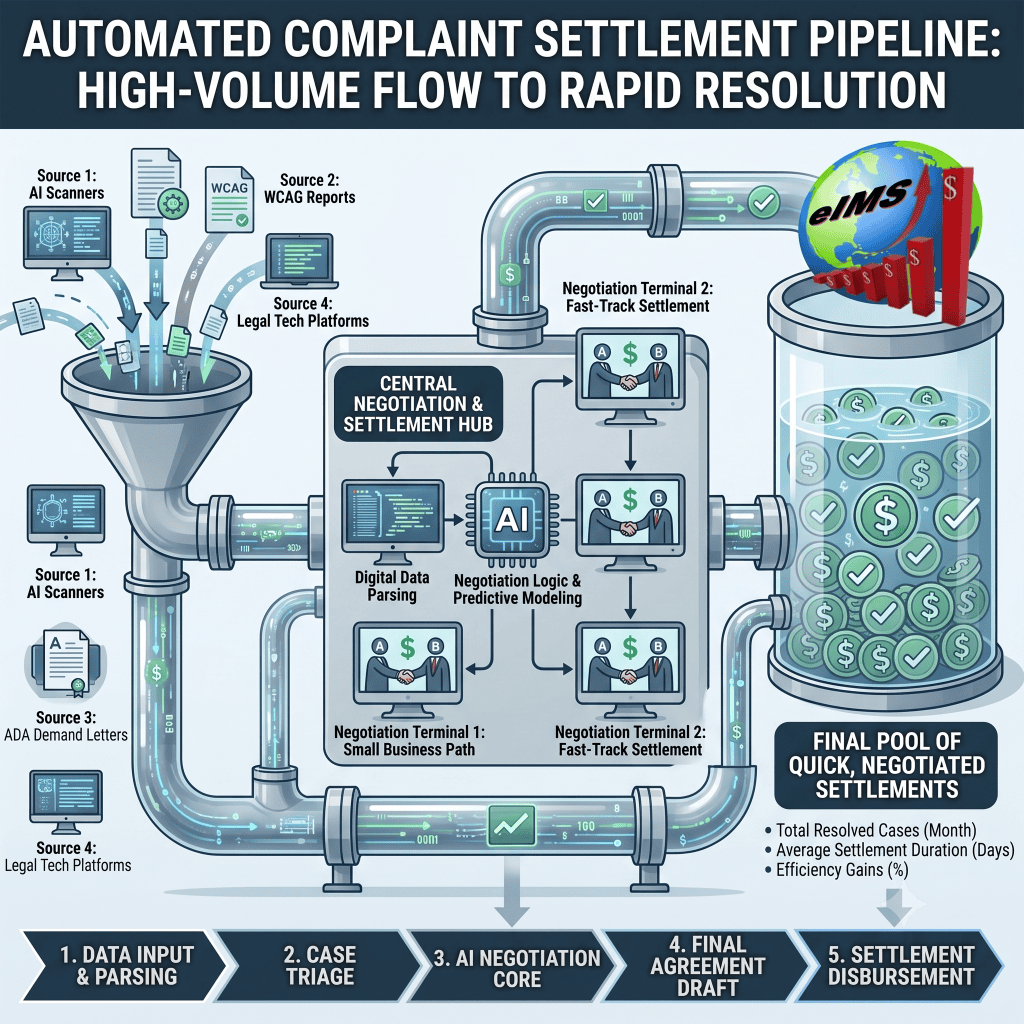
Third, and this is the piece most business owners haven’t caught up on yet, artificial intelligence has removed the manual labor from both finding violations and generating the paperwork to sue over them, quietly turning ADA lawsuits increasing from a legal trend into an automated pipeline. That shift deserves its own section, because it’s the real engine behind ADA lawsuits increasing in 2025 and heading into 2026.
How Is AI Used to Find Websites That Do Not Comply With ADA?
Picture a fishing trawler that never sleeps and never gets tired, hauling in ten thousand fish a night instead of the dozen a hand-line fisherman might land. That’s essentially what AI-powered scanning tools do to the internet on behalf of plaintiff law firms, and it’s a big reason behind ADA lawsuits increasing so quickly.
These automated scanners crawl websites around the clock, checking against the Web Content Accessibility Guidelines (WCAG) 2.1 and 2.2 standards for things like:
- Missing alt text on images
- Insufficient color contrast between text and background
- Forms without proper labels
- Broken keyboard navigation (can a user tab through the site without a mouse?)
- Missing heading structure that screen readers rely on
One documented case involved a single firm scanning more than 10,000 small business sites in a single month. The software doesn’t read your site the way a human visitor does; it parses the underlying code, flags every violation, timestamps it, and ties it to your domain, building a ready-made evidence file before a human ever gets involved.
Here’s the part that surprises a lot of clients: accessibility overlay widgets, the little icon in the corner that promises instant compliance, do not solve this problem, and they’re part of the reason ADA lawsuits increasing hasn’t slowed even among businesses that thought they had covered themselves. In 2025, nearly 25 percent of all website lawsuits were filed against sites that already had an overlay widget installed. Scanners read the raw HTML underneath the widget, not the surface-level patch it applies. The FTC even fined one major overlay provider $1 million in early 2025 for marketing claims that overstated what the tool could actually deliver. A widget is a post-it note on a structural crack, not a repair, and relying on one is a fast track toward becoming another data point in ADA lawsuits increasing.
How Is AI Used to Draft Demand Letters to Companies?
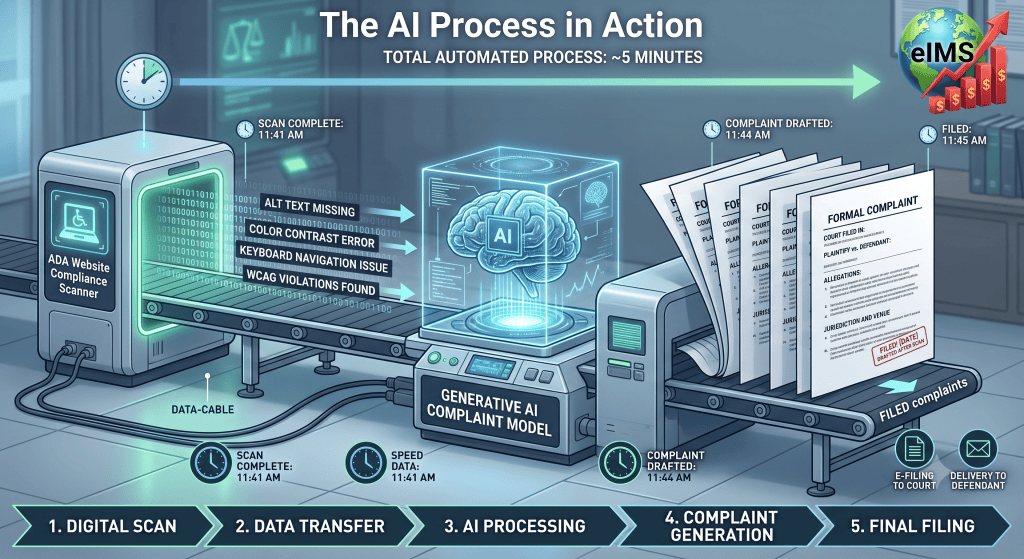
Once a scanner flags your site, generative AI takes over the next step: turning a list of code violations into a formal, legally formatted demand letter or complaint, often within minutes rather than the days it used to take a paralegal. This automation is a major driver of ADA lawsuits increasing at the pace we’re seeing in 2026.
This matters because it collapses the economics of litigation. A process that once required a paralegal to manually review a site, draft custom language, and cite relevant case law can now be templated and mass-produced. That’s a major reason pro se filings, lawsuits filed by individuals without an attorney, jumped 40 percent year over year: AI has lowered the skill and time barrier to producing a court-ready complaint, further accelerating ADA lawsuits increasing across every state, not just the traditional hotspots. Some courts have started pushing back, with at least one federal judge banning AI-drafted filings outright, but enforcement is inconsistent and the practice keeps spreading.
For a business, the practical upshot is speed. The gap between “your site has a violation” and “you have a demand letter in hand” has shrunk dramatically. There’s rarely a warning period or a grace window; the letter often arrives as the business’s first indication anything was wrong, another data point in the broader story of ADA lawsuits increasing.
When Is Legal Action Taken Against Companies?
Not every scanned violation turns into a lawsuit, and understanding the typical sequence helps explain where ADA lawsuits increasing actually turns costly for a business. Here’s the path from ADA lawsuits increasing as a national statistic to a specific case with your company’s name on it.
| Stage | What Happens | Typical Timeframe |
|---|---|---|
| Automated Scan | AI tool detects WCAG violations on your site | Ongoing, continuous |
| Demand Letter | Attorney sends formal notice of violations and settlement demand | Days to weeks after detection |
| Response Window | Business is given a period to respond or negotiate | Usually 30-60 days |
| Lawsuit Filed | If unresolved, formal complaint is filed in federal or state court | After response window closes |
| Settlement or Trial | Most cases settle; a small percentage proceed to trial | Weeks to months after filing |
Sources: TestParty 2026 Guide; Accessible.org; NKLegal 2026 Update.
Legal action tends to accelerate under a few specific conditions: when a business ignores a demand letter entirely, when the plaintiff’s attorney has a high-volume litigation practice and files quickly as a matter of routine, or when a company is a repeat target. That last point matters more than most business owners realize. In 2025, 46 percent of federal cases involved repeat defendants, meaning the business had already been sued once, made a surface-level fix, and got targeted again. Settling a lawsuit without genuine code-level remediation doesn’t close the door on ADA lawsuits increasing against your own domain; it often reopens it.
Most cases resolve through settlement rather than trial. Reported figures put typical settlements in the $5,000 to $75,000 range, though high-profile cases have gone well beyond that. Fashion Nova, for example, agreed to a $5.15 million settlement that included both payment and a commitment to make its website and app accessible, a reminder of just how expensive ADA lawsuits increasing can get for brands that wait too long to act.
Which Industries and States Carry the Most Risk?
E-commerce and retail remain the biggest target by far, accounting for roughly 70 percent of all digital accessibility lawsuits in 2025, followed by food and beverage businesses at around 21 percent. Healthcare is climbing fast too, driven partly by a federal Section 504 web accessibility deadline that hit in May 2026, one more sign that ADA lawsuits increasing is spreading well beyond its original retail roots.
Geographically, New York, Florida, and California together account for over 70 percent of filings, but that concentration is loosening. Illinois saw a startling jump, from 28 cases in the first half of 2024 to 237 in the same period of 2025, a 746 percent increase. Missouri and Minnesota are climbing too, further evidence that ADA lawsuits increasing is a nationwide phenomenon, not a regional one. The takeaway for a nationwide business: there is no longer a “safe” state to hide in. If your site is public, it’s reachable from anywhere, and so is the attorney who might sue you, which is exactly why ADA lawsuits increasing matters just as much in Ohio or Oregon as it does in New York. E-commerce specifically illustrates the scale: with roughly 70 percent of digital accessibility cases hitting online retailers, ADA lawsuits increasing is arguably the single biggest legal risk facing e-commerce operators today.
How Can Businesses Protect Themselves From ADA Lawsuits Increasing Nationwide?
The single most defensible move is genuine, code-level remediation against WCAG 2.1 or 2.2 Level AA standards, not a widget bolted on top. A few practical steps to get ahead of the increasing number of ADA lawsuits before your business becomes a statistic:
- Run a manual and automated accessibility audit of your actual site, not just the homepage.
- Fix issues in the underlying code: alt text, color contrast, form labels, keyboard navigation, heading structure.
- Document everything. A dated audit trail and remediation log is powerful evidence of good-faith effort if a claim ever arrives.
- Publish a clear accessibility statement describing your ongoing commitment and how to report issues.
- Monitor continuously. New content, plugins, and redesigns can reintroduce violations even after a clean audit, which matters because ADA lawsuits are increasingly targeting sites that were compliant once but drifted out of compliance over time.
Waiting for a demand letter to arrive is the most expensive way to discover you have a problem. Proactive compliance is consistently cheaper than reactive litigation, both in dollars and in the distraction it saves your team, and it’s the single best defense against ADA lawsuits increasing landing on your domain next. There may even be a financial upside: many businesses qualify for an ADA Compliance Tax Credit to help offset remediation costs.
Let’s Get Your Website Off the Target List
ADA lawsuits increasing isn’t a regional problem confined to New York courtrooms; it’s a national one, and it’s moving faster than most business owners can track alone. At E-Internet Marketing Services, we work with clients across the entire United States, connecting by video conferencing so geography never gets in the way of getting your digital presence in order.
If you are reading this article on our website, you will see our ADA Widget. It reads “EIMS ADA.” Go ahead and click on it. Test it. See how it opens a new world to those with disabilities.
Whether you need a Google Business Profile refresh, a full website accessibility review, or ongoing content strategy that keeps your brand visible and compliant, our team is ready to meet you exactly where you are, wherever that happens to be. Reach out today, and let’s talk about getting ahead of ADA lawsuits increasing before your business becomes part of next year’s statistics.

Frequently Asked Questions
Q: Are ADA website lawsuits actually increasing, or is this overstated?
A: They’re increasing. Federal website accessibility filings rose 27 percent in 2025 versus 2024, and total digital accessibility lawsuits topped 5,000 for the year once state court cases are included. ADA lawsuits increasing is a documented, multi-year pattern, not a one-time spike.
Q: What’s the single biggest reason behind ADA lawsuits increasing right now?
A: Artificial intelligence. AI-powered scanning tools let plaintiff firms flag thousands of violations automatically, and generative AI drafts the resulting demand letters in minutes, which is the single biggest reason behind ADA lawsuits increasing so quickly in 2025 and 2026.
Q: Does my business need a physical location to be sued?
A: No. Multiple federal courts have ruled that a public-facing website qualifies as a “place of public accommodation” under Title III, regardless of whether the business has a brick-and-mortar storefront.
Q: Will an accessibility overlay widget protect my business?
A: Not reliably. Nearly 25 percent of 2025’s website lawsuits targeted sites that already had an overlay widget installed. Automated scanners read the underlying code, not the surface-level patch a widget applies.
Q: How much does an ADA website lawsuit typically cost to settle?
A: Most settlements fall between $5,000 and $75,000, though high-profile cases have reached into the millions. Attorney’s fees, which a prevailing plaintiff can recover, are usually the largest cost driver.
Q: Can a small business really get sued, or is it just large companies?
A: Small businesses are frequent targets. Plaintiff firms often prefer small and mid-sized businesses because they’re perceived as more likely to settle quickly, which is part of why ADA lawsuits increasing hits main street just as hard as it hits national retailers.
Q: What should I do if I receive a demand letter?
A: Don’t ignore it and don’t panic-fix your site without documentation. Contact an ADA-experienced attorney promptly, and begin a documented accessibility audit so you can make informed decisions about remediation and settlement.
Q: Is my state safe from ADA lawsuits?
A: No state is safe. While New York, Florida, and California lead in volume, states like Illinois, Missouri, and Minnesota saw dramatic increases in 2025, confirming that ADA lawsuits increasing is now a coast-to-coast issue.
Q: Is this trend expected to continue into 2026 and beyond?
A: Yes. Analysts project 2026 filings could exceed 5,500, and factors like AI-assisted complaint drafting and new government compliance deadlines suggest ADA lawsuits increasing will remain the norm rather than the exception for the foreseeable future.
About the Author
 Rick Samara is the founder of E-Internet Marketing Services (EIMS), a national digital marketing agency serving clients across the United States through video conferencing. He is also the award winning author of AI for Beginners Demystified. Rick writes about the intersection of digital compliance, marketing, and emerging AI technology, helping business owners nationwide protect and grow their online presence in the face of ADA lawsuits increasing year over year. Learn more at his author website: ricksamara.com.
Sources
Accessible.org. (2025, November 28). 2026 ADA website compliance predictions: More lawsuits, AI has big impact. https://accessible.org/2026-ada-website-compliance-lawsuits-ai/
Accessibility.build. (2026, May 4). Accessibility lawsuit tracker 2026: ADA & digital accessibility litigation data. https://accessibility.build/research/accessibility-lawsuits
DarrowEverett LLP. (2025, November 25). The rising tide of ADA website accessibility litigation: 2025 insights. https://darroweverett.com/ada-website-accessibility-litigation-insights-legal-analysis/
EcomBack. (2026, June). 2025 ADA website accessibility lawsuit annual report. https://www.ecomback.com/annual-2025-ada-website-accessibility-lawsuit-report
NKLegal. (2026, April 8). ADA website lawsuits and demand letters: 2026 update. https://www.nklegal.com/post/ada-website-lawsuits-and-demand-letters-2026-update
TestParty. (2026, January 1). The 2026 guide to ADA website lawsuits: What to do when you get sued (and why your widget failed). https://testparty.ai/blog/the-2026-guide-to-ada-website-lawsuits-what-to-do-when-you-get-sued-and-why-your
UsableNet, Inc. (2026). ADA compliance website lawsuit tracker. https://info.usablenet.com/ada-website-compliance-lawsuit-tracker