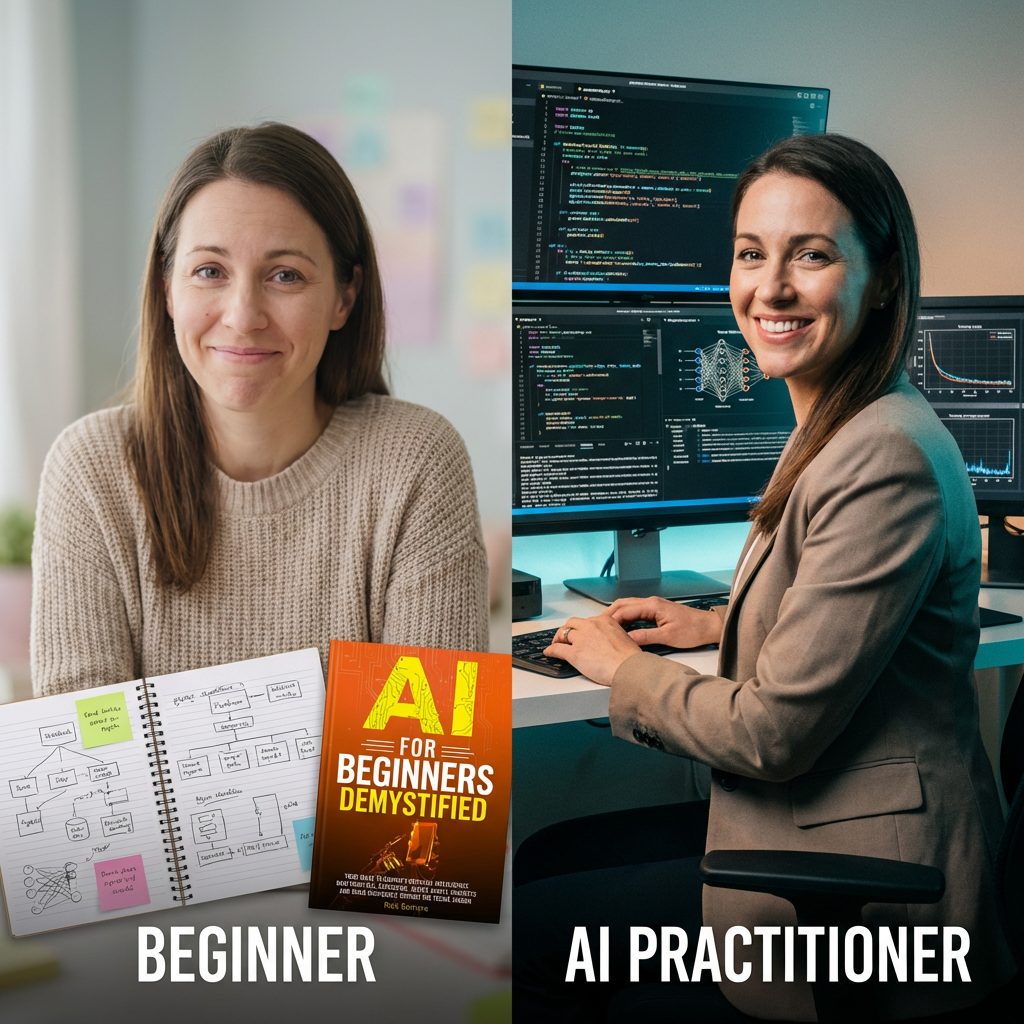
Multimodal Content Creation: Moving from AI Beginner to AI Practitioner
There’s a clear difference between casually using AI and applying it strategically. The bridge between the two is multimodal content creation. And no, that’s not just a fancy phrase to impress people at networking events. It’s a practical method for turning one idea into multiple forms of communication using AI. Done right, multimodal content creation helps you move from AI beginner to AI practitioner — without needing a computer science degree or a 12-person marketing team.
If you’ve been experimenting with AI and thinking, “This is interesting, but now what?” — you’re in exactly the right place.
Let’s break it down.
What Is Multimodal Content Creation?
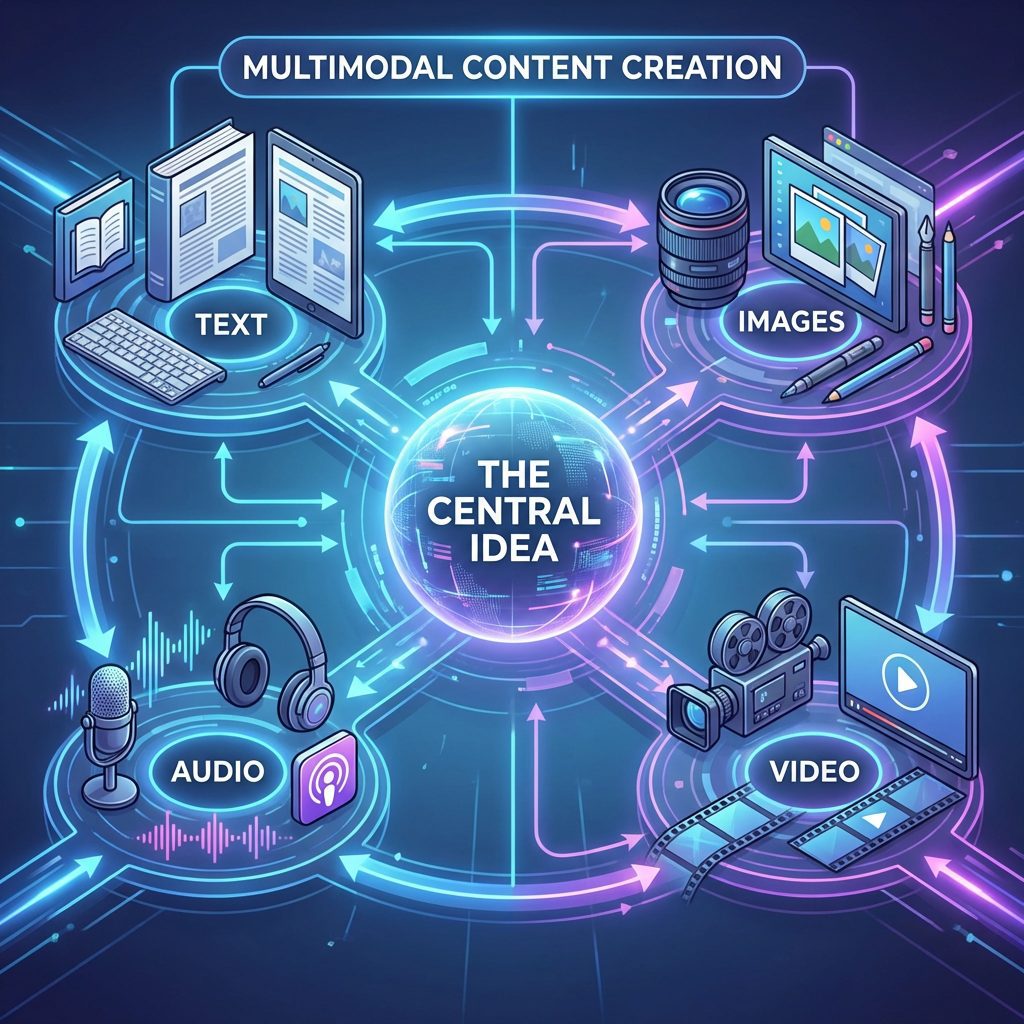
At its core, multimodal content creation means producing content in multiple formats: text, images, audio, and sometimes video, from the same central idea.
Instead of writing a blog post or article and stopping there, you:
- Turn it into five social media posts
- Create a simple graphic that reinforces the message
- Draft a short script for video or podcast use
- Repurpose key points into a newsletter
One idea. Multiple formats. Broader reach.
AI makes multimodal content creation accessible to anyone in the United States who wants to use technology to their personal or business advantage.
Why Multimodal Content Creation Matters Now
Attention is fragmented. Some people read. Others watch. Others listen while driving across Texas or commuting in New York.
If your message exists in only one format, you are limiting your impact.
Multimodal content creation ensures your message adapts to how your audience prefers to consume information. For small business owners, consultants, educators, and professionals across the U.S., that adaptability is a competitive advantage.
And here’s the encouraging part: AI removes much of the technical friction. You no longer need separate tools, teams, or budgets for every format.
From AI Beginner to AI Practitioner
Beginners experiment. Practitioners implement.
The difference isn’t intelligence. It’s structure.
When you adopt multimodal content creation as a workflow rather than a one-off tactic, you begin thinking strategically:
- What is my core message?
- How can this message live in multiple formats?
- How can AI accelerate this process without sacrificing quality?
That shift in thinking marks the move toward professional application.
Also, let’s be honest: when you see your article transformed into a clean graphic and five polished posts in under an hour, confidence tends to follow. AI suddenly feels less intimidating and more like a capable assistant.
A Simple Multimodal Content Creation Workflow
If you’re just beginning to experiment with AI, start here. Use this as a practice exercise.
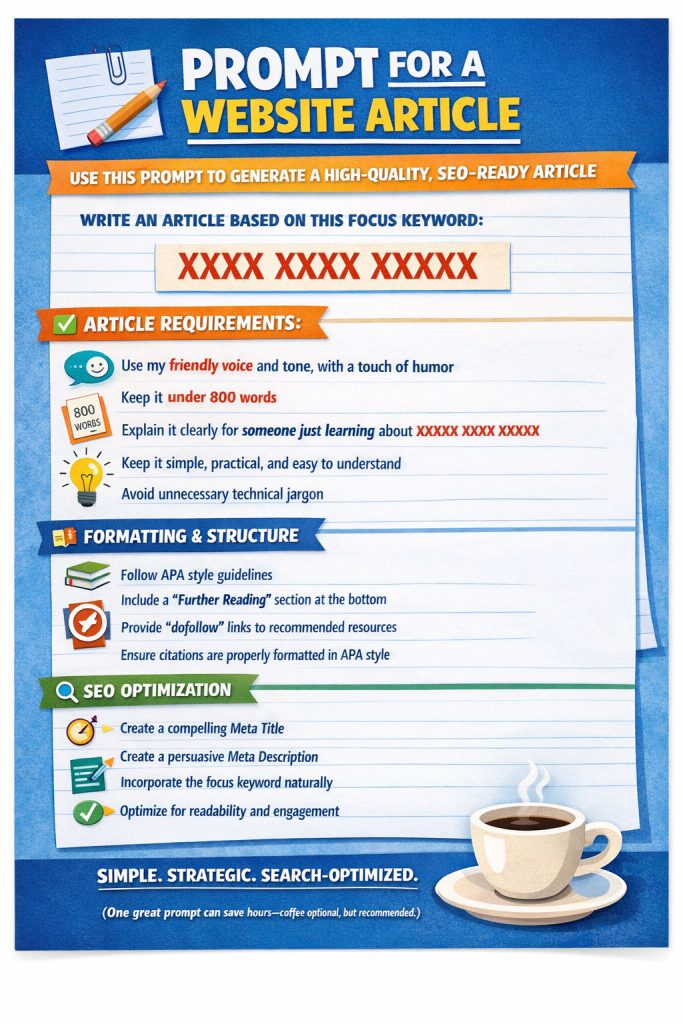
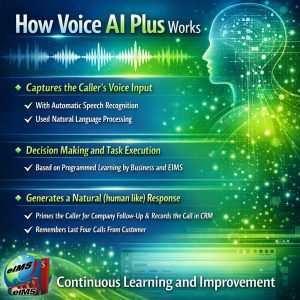
This Flyer was Created using ChatGPT
Step 1: Write a Short, Focused Article
Use ChatGPT for this exercise. Keep it under 800 words.
Use AI to help structure it clearly. Be explicit with your prompt:
- Define the task (write a blog post or article).
- Specify the focus keyword. Just replace the red X’s with your own three-word focus keyword or phrase.
- Identify the audience (here is used “someone just learning about the three-word keyphrase.”)
- Clarify tone (professional, approachable, lightly humorous).
This clarity improves the output dramatically.
Once you’ve used ChatGPT to write your article, you are ready to move on .
Step 2: Repurpose the Core Message
Tell ChatGPT to:
- “Turn this into five LinkedIn posts.”
- “Summarize this into three key talking points.”
- “Create a short script based on this article.”
This is where multimodal content creation becomes practical. You are not starting from scratch each time. You are extending the life of one idea.
Step 3: Generate a Supporting Visual
Use AI image tools to create (Chat GPT does a great job.):
- A simple infographic
- A branded quote card
- A clean visual that reinforces your key concept
Now your message exists in text and visual form. That is multimodal content creation in action.
Why Businesses Across the U.S. Should Care
Whether you run a small business in Ohio or consult in California, the rules are the same: visibility matters.
Multimodal content creation allows organizations to:
- Compete visually with larger brands
- Maintain consistent messaging
- Publish more frequently without burnout
- Stretch marketing budgets
In other words, AI levels the playing field.
Instead of hiring separate writers, designers, and social media managers, professionals can use structured AI workflows to produce aligned content efficiently.
This doesn’t replace human judgment. It enhances it.
Use Multimodal Content Creation Intentionally
AI can generate a lot of content quickly. That does not mean everything should be published.
Before sharing anything, ask:
- Does this align with my values and brand?
- Is it accurate?
- Is it useful?
Multimodal content creation works best when guided by human strategy. AI executes. You decide.
Practitioners understand this balance. Beginners learn it quickly.
The Bigger Picture
We are entering a communication environment where single-format strategies are fading. Visual and audio engagement are becoming standard expectations. Learning multimodal content creation now positions you ahead of the curve. It builds adaptability. It builds confidence. It builds strategic thinking.
Most importantly, it reduces the gap between idea and execution.
AI does not replace creativity. It accelerates it.
And for anyone in the United States looking to use AI to their personal or business advantage, multimodal content creation is one of the most practical starting points available.
Start small. Stay consistent. Improve intentionally.
That’s how beginners become practitioners.
If anything, multimodal AI simply removes the friction between your idea and its execution.
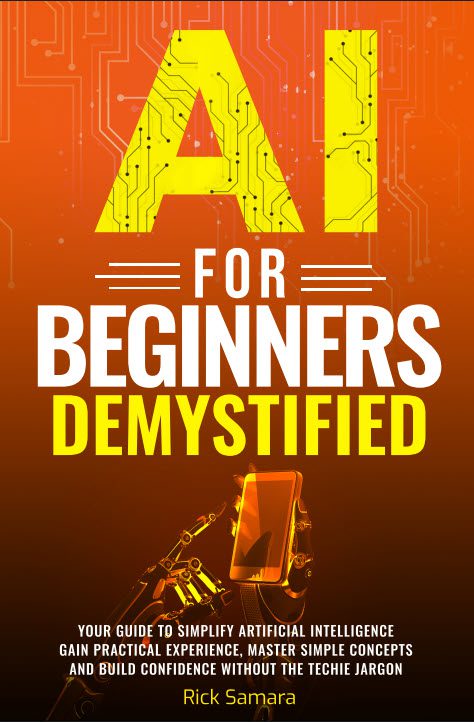
And that’s a powerful place to be. I mention in my book, AI for Beginners Demystified, that my readers should continue their education in AI. I cite many good sources for continuing education. So, I practice what I preach. I’ve completed six certification courses. However, I have found that some courses are somewhat outdated. With AI Technology moving so fast, I believe the only true way to keep up is through Practice, Practice, and more Practice.

Further Reading
Brynjolfsson, E., & McAfee, A. (2014). The second machine age: Work, progress, and prosperity in a time of brilliant technologies. W. W. Norton & Company. https://wwnorton.com/books/the-second-machine-age/
McKinsey & Company. (2023). The economic potential of generative AI: The next productivity frontier. https://www.mckinsey.com/capabilities/quantumblack/our-insights/the-economic-potential-of-generative-ai-the-next-productivity-frontier
OpenAI. (2023). GPT-4 technical report. https://openai.com/research/gpt-4
Stanford University. (2024). AI Index Report 2024. Stanford Institute for Human-Centered Artificial Intelligence. https://aiindex.stanford.edu/report/
World Economic Forum. (2023). The future of jobs report 2023. https://www.weforum.org/reports/the-future-of-jobs-report-2023/