Artificial Intelligence is no longer something you plan to learn about someday. The focus of this article is to discuss AI in real-world use.
It’s already part of everyday life—quietly influencing how we write, plan, communicate, and think. Most people now have at least a basic understanding of what AI is. They’ve read about it, heard about it, maybe even tried it once or twice.
And then… they stop.
Not because they’re uninterested.
But because understanding AI and using it confidently are two very different things.
In today’s technical world, that gap matters more than ever.
Why Understanding AI Isn’t the Same as Using It?
Knowing what AI is can feel reassuring until you’re staring at a blank screen, wondering what to actually do with it.
This is where many people get stuck. They understand AI conceptually but hesitate in practice. They worry about relying on it too much, using it incorrectly, or doing something “wrong.”
That hesitation isn’t a lack of intelligence.
It’s a lack of practice.
Understanding is passive. Practice is active. And confidence only shows up when you move from one to the other. So, practice, practice, practice.
It’s been my personal experience that I use AI every day in my work. It’s amazing how much time it saves me. Today, I used it to prepare an email informing my readers that I have won two awards for my book, AI for Beginners Demystified. I easily converted this into a LinkedIn post. Plus, using Galaxy AI, I was able to create this picture.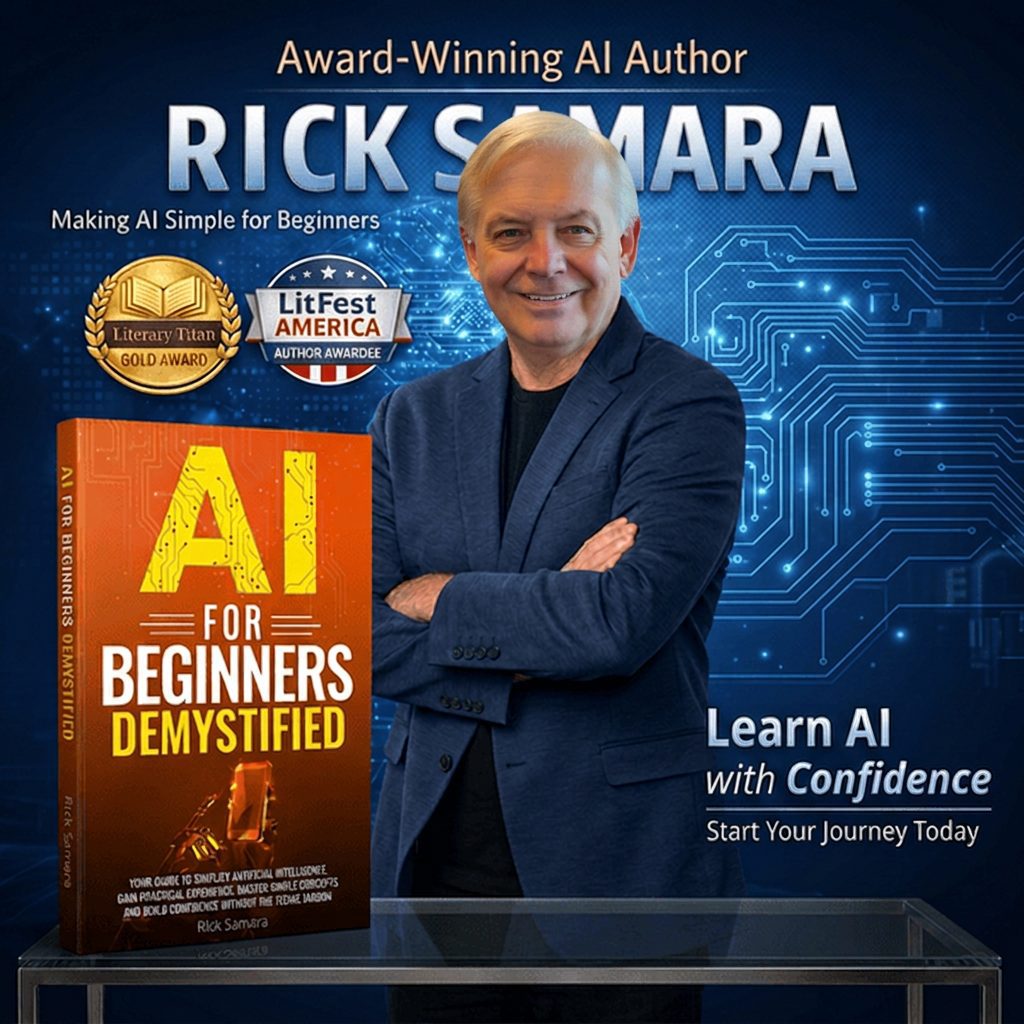
What Does It Mean to Be an AI Practitioner?
Moving from Curiosity to Capability
An AI beginner asks, “What is this?”
An AI practitioner asks, “How does this help me right now?”
Practitioners don’t use AI because it’s impressive. They use it because it’s useful. They don’t chase trends or features. They focus on everyday situations where AI reduces friction, such as clarifying writing, organizing thoughts, brainstorming ideas, or preparing something before sharing it with others.
Nothing flashy.
Nothing intimidating.
Just practical use.
That shift—from curiosity to capability—is what turns AI from a novelty into a reliable tool.
Why This Shift Is So Important Today?
Technology Isn’t Waiting for Us to Feel Ready
AI is already woven into modern work and communication. Choosing not to engage with it doesn’t slow that reality down—it just leaves people reacting instead of deciding.
At the same time, uncritical or careless use brings its own risks. Blind trust, overreliance, and disengagement from thinking are just as problematic as avoidance.
Becoming an AI practitioner is how you stay in the middle ground:
-
engaged but not overwhelmed
-
confident but not careless
-
open without giving up control
That balance is essential in a world where technology keeps moving, whether we’re ready or not.
Confidence Comes from Repetition, Not Mastery
You Don’t Need to Be an Expert—You Need to Be Familiar
Many people believe confidence comes from knowing more.
In reality, confidence comes from doing the same small things repeatedly.
Practitioners use AI in familiar ways:
-
to clarify ideas
-
to organize tasks
-
to improve communication
-
to think things through
Over time, AI stops feeling unpredictable. You know what it’s good at. You know where it struggles. You stop wondering whether you’re “doing it right” and start focusing on whether it’s helping.
That’s confidence. And it’s built quietly.
Why Intention Makes AI Useful
Random Use Creates Doubt. Intentional Use Creates Trust.
Using AI occasionally and randomly keeps it feeling unreliable.
Practitioners decide in advance how they use AI and where it fits. That intention removes hesitation and second-guessing. You’re no longer experimenting—you’re applying.
When AI has a clear role, it becomes dependable. And when it’s dependable, you’re more likely to use it responsibly instead of impulsively.
Responsibility Is What Keeps You Human
AI Can Assist—But It Can’t Be Accountable
AI can help you think, draft, organize, and explore options. What it cannot do is take responsibility for outcomes.
Practitioners understand this instinctively.
They review before sharing.
They revise before deciding.
They stay aware of tone, bias, and context.
They don’t hide behind AI. They remain fully responsible for what they create and choose.
That’s what ethical, responsible use looks like in real life—not rules or restrictions, but awareness and ownership.
The Real Advantage of Becoming a Practitioner
Moving from AI beginner to practitioner doesn’t make you more technical.
It makes you more intentional.
More confident.
More thoughtful.
And, yes, a little less stressed.
Because when you know how to use AI, you stop worrying about whether you should.
You just use it where it helps—and move on with your day.
Final Thought: This Skill Lasts
AI tools will change. Interfaces will evolve. New capabilities will appear.
But the ability to work with AI confidently, intentionally, and responsibly is a durable skill. It carries forward no matter what the technology looks like next.
You don’t need to master AI.
You just need to practice with it.
That’s how understanding becomes real-world use.
And that’s how beginners become practitioners.
Frequently Asked Questions About Using AI in Real Life
1. How do beginners start using AI in real life?
Beginners can start using AI by choosing simple, everyday applications like writing emails, generating content, or automating repetitive tasks. The key is to take small, practical steps and use AI tools consistently to build confidence.
2. What is the easiest way to learn artificial intelligence for beginners?
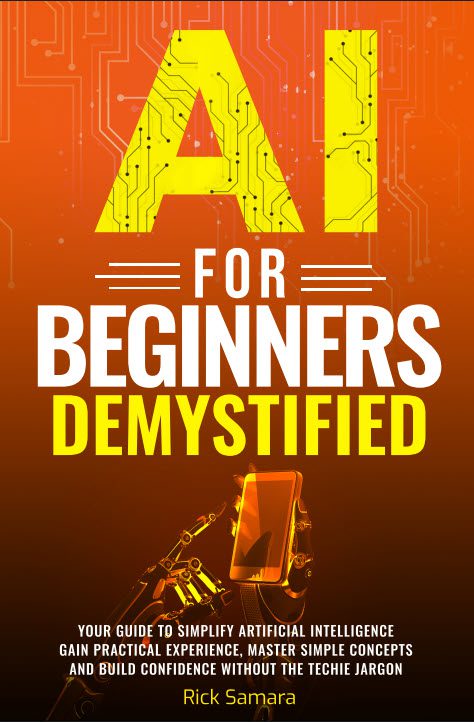
The most effective way to learn artificial intelligence is through hands-on experience rather than theoretical knowledge. Resources like AI for Beginners Demystified focus on real-world examples, helping users understand AI without technical jargon.
3. Can non-technical people use AI tools effectively?
Yes, AI tools today are designed specifically for non-technical users. You don’t need coding skills or a technical background—just basic digital skills and a willingness to experiment.
4. What are practical examples of AI in everyday life?
AI is already part of daily life, including:
- Virtual assistants like Siri or Alexa
- AI-powered chat tools for writing and brainstorming
- Personalized recommendations on shopping platforms
- Smart home devices and automation tools
These examples show how AI improves convenience and productivity.
5. How can AI help small businesses grow?
AI helps small businesses by:
- Automating customer service with chatbots
- Improving marketing with data-driven insights
- Saving time on repetitive tasks
- Enhancing content creation and social media strategies
Businesses that adopt AI often gain a competitive advantage.
6. Why are people afraid of using AI?
Many people fear AI because it feels complex or unfamiliar. There are also concerns about job loss or making mistakes. However, AI is best viewed as a tool that enhances human capabilities, not as one that replaces them.
7. How long does it take to learn how to use AI tools?
Most beginners can start using AI tools within a few hours. Building confidence typically takes a few days to a few weeks of consistent use, depending on how often you practice.
8. What are the benefits of using AI in everyday tasks?
The main benefits of using AI include:
- Saving time and increasing efficiency
- Improving accuracy and productivity
- Enhancing creativity and idea generation
- Simplifying complex tasks
AI acts as a powerful assistant in both personal and professional settings.
9. Is AI difficult to learn for beginners?
AI is not difficult when explained properly. The challenge usually comes from overly technical explanations. Beginner-friendly resources break concepts into simple, relatable ideas that are easy to apply.
10. What mistakes should beginners avoid when using AI?
Common mistakes include:
- Overthinking instead of taking action
- Expecting perfect results immediately
- Not experimenting with different prompts or tools
- Giving up too quickly
The best way to learn AI is through consistent practice and experimentation.
11. Will AI replace jobs in the future?
AI will transform jobs rather than eliminate them entirely. While some roles may change, new opportunities are being created. Learning how to use AI can actually make you more valuable in the workforce.
12. What is the best resource for learning AI for beginners?
One of the best resources is AI for Beginners Demystified, which provides a simple, engaging, and practical introduction to AI with real-world applications and exercises.
13. How can I become confident using AI tools?
Confidence comes from action. Start small, use AI daily, and gradually explore more advanced features. Over time, AI will feel like a natural extension of your workflow.
14. What industries benefit the most from AI?
AI is transforming nearly every industry, including:
- Marketing and advertising
- Healthcare
- Finance
- E-commerce
- Education
Its versatility makes it valuable across both small businesses and large organizations.
References
Pew Research Center. (2023). How Americans view artificial intelligence.
https://www.pewresearch.org/internet/2023/10/18/how-americans-view-artificial-intelligence/
World Economic Forum. (2023). Human-centered artificial intelligence.
https://www.weforum.org/topics/artificial-intelligence/
Organization for Economic Co-operation and Development. (2019). Artificial intelligence and society.
https://www.oecd.org/going-digital/ai/
Harvard Business Review. (2020). Building the AI-powered organization.
https://hbr.org/2020/07/building-the-ai-powered-organization
Brookings Institution. (2021). Governing artificial intelligence: Ethical and responsible use.
https://www.brookings.edu/articles/governing-artificial-intelligence/